A harmonious self

It is wisest to be impartial. If you have health, but are attached to it, you will always be afraid of losing it. And if you fear that loss, but become ill, you will suffer. Why not remain forever joyful in the self? – Swami Yogananda

A harmonious self is far more valuable than an unhappy self. Ill health can affect us anytime, but do we have to brood about it and dwell on it. One has to understand that it is our thoughts which are influencing us and when that happens, we begin to think that we are victims. The question which come up is: “why me”? Continue reading

Equanimity: Dharanas 100 and 101


Equanimity is a state of non-attachment, where one observes experiences without getting carried away by them. In Shaiva Tantra equanimity is also a pathway to deeper spiritual realization. Equanimity is cultivated through practices like self-reflection and cultivating awareness of one’s thoughts and emotions.

Vijnana Bhairava gives two Dharanas. Continue reading

Abhinavagupta’s commentary on the Bhagwad Gita

He who sees equally, whether in pleasure or pain, his own self in everything, because he can be compared with his own self, he is deemed the highest yogin Arjuna. – Chapter 6.33

The Yogin experiences the pleasures or suffering of all beings as his own.

Who is a Yogin?

A yogin is someone who has achieved a state of self-realization and union with the divine, often through dedicated practice and self-discipline. A yogin is characterized with equanimity, control over the senses and detachment from worldly desires, viewing everything dispassionately.

Aim Hrim Klim

Knowledge is Spiritual Wisdom

To know that we know what we know, and to know that we do not know, that is true knowledge. – Nicolaus Copernicus

The Bhagwad Gita emphasizes the importance of self-realization and the pursuit of knowledge as a means to attain spiritual enlightenment. It teaches that true wisdom lies in understanding the impermanence of the material world and recognizing the eternal nature of the soul. By seeking knowledge and introspecting on the nature of reality, we can transcend the cycle of birth and death and become spiritually liberated. Continue reading

Learn from a new born baby

Uddaseena Vritti is a mental state where one can observe the world and its happenings with equanimity. It is a step towards achieving a state of nirvana.

The learned or the wise smile through the eyes; the middle-class smile through the teeth and lips; the lowest make a roaring laughter; but the muneeshwara (a form of Shiva) never smiles or laughs. Continue reading

Yoga will save you from dying slowly

Dear ones, this is a poem by Pablo Neruda.

You start dying slowly
If you do not travel,
If you do not read,
If you do not listen to the sounds of life,
If you do not appreciate yourself.

You start dying slowly
When you kill your self-esteem,
When you do not let others help you.

You start dying slowly
If you become a slave to your habits,
Walking everyday on the same paths…
If you do not change your routine
If you do not wear different colors
Or speak to those you don’t know.

You start dying slowly
If you avoid feeling passion
And their turbulent emotions––
Those that make your eyes glisten
And your heart beat fast.

You start dying slowly
If you do not risk the safe for the uncertain,
If you do not chase a dream,
If you do not allow yourself,
At least once in your lifetime,
To run away from sensible advice.
Don’t let yourself die slowly.
Do not forget to be happy.

Continue reading

Heaven and Hell

A mind not to be changed by place or time
The mind is its own place, and in itself
Can make a heav’n of hell, a hell of heaven. – John Milton

Dear ones, how can we help ourselves? Our mind likes to be in charge and how is it in charge? It is in charge because it is full of thoughts, which are tugging at our feelings and emotions. It is compounding all our issues. We are beings led by our thoughts. Continue reading

Words can be powerful and destructive

Dear Ones, look at words starting with Re.

Responsibility is the word which governs one and all. Do we assume responsibility for our actions or do we blame others?
Regret means to feel sorry and to be sincere about it.
Reward means compensation, award or profit.
Recommend means to endorse or support.
Recompense means to compensate, to pay or repay and satisfy.
Repayment means to reciprocate, to give back or pay back.
Requital means to give something in return.
Reconciliation means an agreement or harmony. Continue reading

610 – Colors and thoughts

Swami Sivananda defines color and thoughts brilliantly. He also speaks about the color of our thoughts. According to him, a spiritual thought is yellow in color, an angry thought is red in color, a thought focusing on hatred is of a blood red color and a selfish thought is brown in color. Continue reading

540 – The synergy between the Mother and Rama

Chaitra Navratri signifies the creation of the universe and the beginning of the universe and beings. Durga Ma was engaged in the procreation of the world and therefore this festival is considered to be the beginning of the Hindu year. It also demonstrates the synergy between Devi and Rama. What is our role and how can we celebrate Chaitra Navratri with our hearts and souls. Continue reading

443 – What are our treasures?

For where your treasure is, there your heart will also be. – Matthew 6:21.

Instead of valuing and building treasures on earth, Christ urged his followers to store up treasures in heaven. – Matthew 6:19-20.

The heart is considered to be the seat of life in the Bible. Hence it means mind, soul, spirit or one’s entire emotional nature and understanding. Continue reading

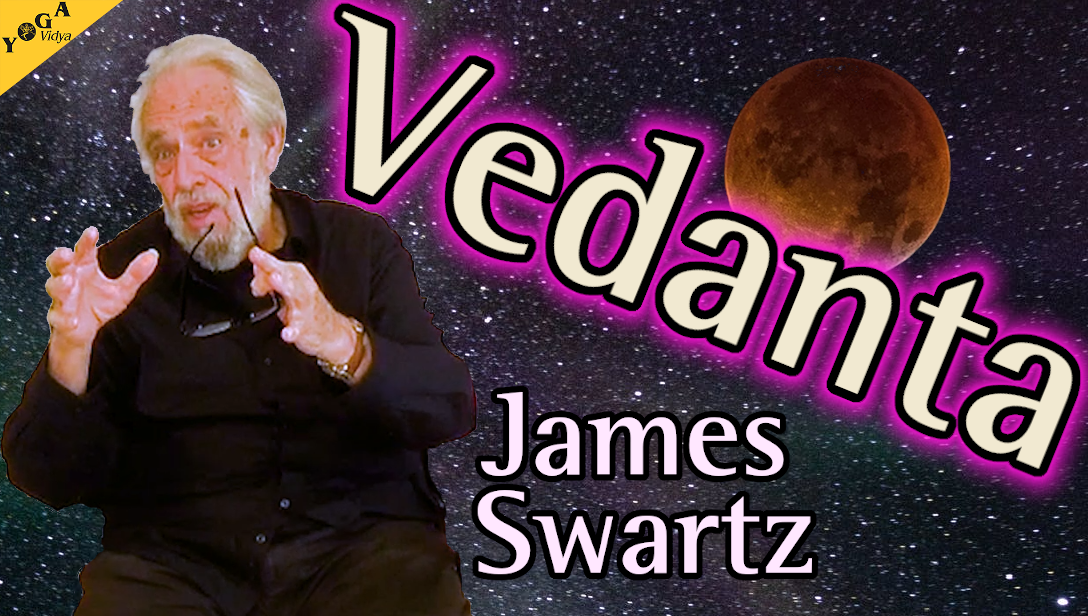
James Swartz – Nature of non dual love – Talk 8

Beginning of the verses of Narada’s Bhakti Sutras. Traditional

versus modern style of teaching. Vers 1: Using intellect for
justification is not useful. Devotion is directed to God. Treat
the people around you as if they are God. Devotion is rational.
Vers 2: Focus all of your attention on one topic: who am I?
Samadhana. Love is willing attention. Love of what is right
here and now. You are always present. You love your self.
Selflessness. You are the goodness that makes goodness
good. Hate is a perverted form of bhakti. Duality: Men are
defined by women. You don’t love objects, you love love.
Chasing love in objects is useless. Vers 3+4: You know you
don’t die and get a security benefit. The worry goes away.
Immortal love. Perfection benefit. Gain of knowledge, loss of
ignorance. Enlightenment sickness. Love is your nature. You
are not the body. You were here before your body was born.
Solution is to accept the words of the scripture. Vers 5: Life is
not jiva centered anymore. Free of passion for objects. No
need to feel special. Vers 6: Feel wonderstruck because you
understand and fulfilled the purpose in your life. You know you
are love.

More: Vedanta Seminars.

More on: Vedanta.

Learn more about: Yoga Vidya.

You can sign up for: our online seminars.
You can also support us by: donating.


Play