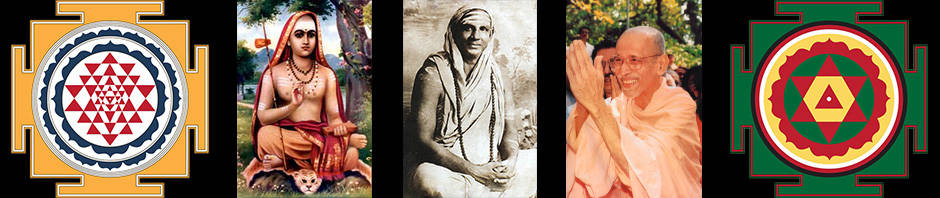

In Tantra, Padukapanchaka means the “Fivefold footstool of the Guru”. It is a hymn praising the key centers in the body, particularly within the Sahasrara (Crown chakra). It represents the divine seat of consciousness where Kundalini energy culminates leading to liberation and realization through visualization the Guru’s feet resting on the mystical throne. It is central to Kundalini and Laya Yoga, describing the ascent of consciousness through stages like the twelve petalled lotus, sacred triangles, Nada-Bindu, and Mani-Pitha culminating in union with the Divine.
Explanation
The Paduka means the footstool. It symbolizes the resting place or seat of the Guru or the ultimate reality (Shiva-Shakti).
Panchaka means five-fold and it refers to five specific, energetic visual components, often identified as:
- The twelve petalled lotus in the Sahasrara.
- The A-Ka-Tha triangle within its pericarp.
- The Nada (sound), Bindu(point), and Mani-Pitha (jeweled seat) within that triangle.
- The Hamsa (swan breath) below.
- The triangle on the Mani-pitha, forming the Kama-kala (divine creative energy).
Its Tantric Significance is that the hymn describes meditating on these internal structures, visualizing the Guru’s (Shiva-Shakti) radiant feet (symbolizing enlightenment) upon this sacred throne, which purifies the practitioner and grants spiritual insight.
In essence it is a Tantric meditation text (strotra) by Shiva himself, offering a map of the subtle body’s highest spiritual centers and a method (through devotion and visualization) to attain liberation (moksha) by uniting with the divine principle.
To make it simpler, the Paduka Panchak is the five-fold footstool within the Sahasrara chakra. In this context the meditation refers to meditating on the five specific sacred elements (the twelve petalled lotus, a specific triangle, the region of Nada, Bindu, Mani-pitha and Hamsa) within the Sahasrara to attain liberation.
Aim Hrim Klim