
George Bataille was a famous French Philosopher and intellectual and he influenced many modern thinkers. His thinking focussed on excess, waste and transgression. Continue reading

George Bataille was a famous French Philosopher and intellectual and he influenced many modern thinkers. His thinking focussed on excess, waste and transgression. Continue reading

What do we aspire for from the Divinity?
Our aspiration is that the Divinity will protect us, guide our souls and help us to attain peace and freedom from fear. We look upon the Divine as our ultimate Guru and benefactor, and someone who answers our prayer. Continue reading

Subramanya is the joint representation of Sakti and Shiva. He is also known as Murugan or Skanda. He is the Hindu god of war, victory, courage and divine wisdom. He is the first son of Shiva and Parvati and younger brother of Ganesha. He holds a the Vel, a sacred spear representing divine wisdom, intellect and the destruction of negative forces or ignorance. Continue reading

On Thursday, the day of benefic Jupiter, rituals, fasts,
Pilgrimages and sacraments like marriages will be auspicious.
By the blessings of the Guru all weeks
In the reign of Lord Rama brings welfare and abundance.

On Tuesday, the day of wrathful Mars, bow to the guru’s feet.
As Time may provide, you will have success
In legal disputes and ventures relating to land.
You will defeat your enemies
And overcome all obstacles in your way.

The Oracle of Rama is often called the Rama Ajna Prashna (Goswami Tulsidas). In the Oracle of Rama, a sacred divination method from the Ramcharitmanas, Sundays are governed by the powerful energy of the Sun. It consists of seven chapters, divided into seven sections with each section in turn divided into seven verses. Chapter 7 of this epic features the victory and return to Ayodhya making it a great day for positive outcomes. The Oracle can be consulted by all, even children. Continue reading

Abhay Sukta—Hymn of Fearlessness is from the Atharva Veda (Kanda XIX, Hymn 15). It is a powerful Vedic prayer addressed to Indra. It is chanted to dispel anxiety, overcome fear of the unknown, and seek protection against both internal and external threats. It is said to have been composed in the period of 1500 BCE and 1000 BCE. The Sukta states surrendering to the divine to achieve a state of inner calm and absolute security. Continue reading

Many of us are afraid of being alone. If you pause and think, are you really alone? No, because we are in the presence of Divinity and the presence of God is everywhere. It is our thoughts always which play on our feelings and emotions. Continue reading

According to Swami Satyananda the easiest path to divinity is to think about others. To think about others is to think about God; to serve another is to worship God. Have at least some corners in one’s heart for the suffering and sadness of others. If one helps one’s fellow beings even a little, then God will shower his grace on one. Continue reading
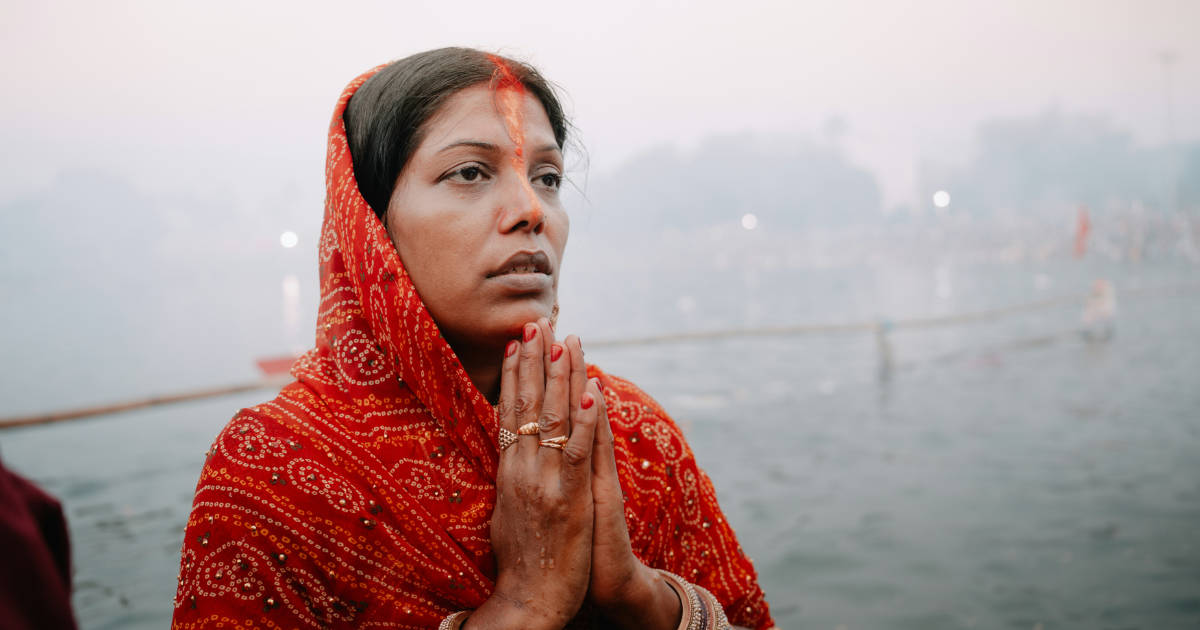
Vandana is worship through prayer and prostration. This form of Upasana includes: humble prostration, touching the earth with the eight limbs of the body (Ashthang Namaskara), bowing down with faith and reverence before a form of God, bowing to beings as forms of the one God and getting absorbed in the divine love of the lord. Continue reading

And why should I have a daily sadhana?
What is the meaning of sadhana? Sadhana originates from the root sadh meaning to accomplish, to attain, or going straight to a goal. It acts as a spiritual practice and is a tool for personal transformation, allowing the sadhaka to work on themselves to achieve their life purpose. Continue reading

Even a little meditation daily will raise you a little higher and a little nearer to God.
You create your future, you create your destiny and you build your character through your thoughts and deeds.
If you think nobly, you will be born with a noble character. If you think badly and basely you will be born with a bad and basic character. This is the absolute law of nature.
Therefore, have noble thoughts and perform noble deeds. – Swami Sivananda
Dear ones, we have to be rid of the entanglement of our thoughts. Only then can we proceed on the path of devotion. Continue reading

Persevere plod on in your sadhana.
Introspect and find out your defects. Remove them one by one by developing the opposite virtue.
Find out the correct value of life here. It is not full and perfect. There is always a sense of want.
Meditate. Meditate. Meditate.
This is the secret for attaining God realization. – Swami Sivananda
Dear ones, practice self-introspection, self-reflection and become self-aware and detached.
These qualities do not develop in a day but persistent practice of Sadhana will lead us.
Swami Sivananda said that just saying the name of the Divinity we will be granted self-realization.
Aim Hrim Klim

I came across a beautiful description of how to connect with the Divinity. Swami Sivananda said when you see a rose, think of how the rose came about. The creation of the rose bush was by God. Like so everything that you see, go back to its root source. Continue reading
Buddha was once asked, “What is truth?” He replied, “Truth is that which can be used.” The definition of truth is, “That which can be used.”
Science has defined truth as that which can be made use of and which can be shown. Continue reading