Befriend Time

Dear ones, how does one treat time? I will share a secret with you. This secret can be revealed to you only if you practice your sadhana daily.

I have been treated very well by time, because I have so much of it. I do not have time anxiety as I go with a relaxed state of mind. I am not thinking of all the things I have to do. It is amazing when one understands this, because then you go from one activity to another calmly. Continue reading

Mantra Meditative Awareness

Originally, the mantra system one needed to identify with the vibration as much as possible. That is why mantras are always repeated, not chanted just once. If for half an hour, one keeps repeating Aum, Aum, Aum or Soham, Soham, Soham and nothing exists beyond this repetition. When the mantra is sustained over a period of time in this manner, for five minutes, ten minutes or fifteen minutes, then one merges one’s consciousness in the feeling, chanting and repetition of the mantra and one begins to identify with vibrations that one is creating while chanting the mantra. This is called Mantra Meditative Awareness.

Continue reading

Lessons from Pain and Suffering

I am sharing some quotes with you, dear ones. Some are ancient sayings and yet they are contemporary in their meaning. It is possible for us to overcome our pain and suffering. We can convert it into our strength and be on the path of self-realization. Continue reading

Am I an Ahimsak?

Are we ready to accept Ahimsa as a way of life?
Are we already trying to practice Ahimsa?
Are we ready to ask ourselves how truthful am I?
Do we try to be compassionate or are we always in a compassionate mode?
Remember that Ahimsa also means non-injury in mind, word and action. Are we doing that or trying to do it?
Do we respect all life?
Do we acknowledge the Divine presence in sentient beings?
Are we true Yogis in thought and mind? Continue reading

Sentient Awareness and Concentration

Concentration the word is used by everyone. What does it mean? We tell ourselves and others to be centered, focused, attentive, absorbed, engrossed and determined. All these words mean that we should concentrate on one subject or object only. We know that this is extremely difficult and any number of images and ideas come into our minds. Children, are described as being distracted, or in extreme circumstances suffering from attention deficit disorder. Continue reading

Description of the Inner Self

The Yogic scriptures describe the human being as being composed of four bodies. At the center is the Self. Moving from outer to inner or the gross to the subtle. They are the physical body, the subtle body, the causal body and the supra-causal body. The attributes are kriya to the physical action, Gnana or knowledge, Iccha or will and desire and the most subtle, the state of the Self. Continue reading

The sacred syllable of the Goddess

Hrim is the Bija mantra for the Goddess. The letter H is the gross body. The gross body is the physical, tangible form. The letter R is the subtle body encompassing the mind, intellect and vital energies. I is the whole causal body which is the Karana sharira which is the most refined of the three bodies. It is karmic repository and the seat of one’s ego. The sound Hrim is I myself as the transcendent fourth, when one has gone beyond physical needs and realities. One has entered a spiritual state. Continue reading

Looking at the world through rose colored spectacles

Since my practice of Yoga, and Atmabhava, which I try to practice all the time, I end up being a bleeding heart. These phrases, looking at the world through rose colored spectacles and bleeding heart, what do they mean? The first one is an idiom which means to be overly optimistic or to view things in an unrealistic way. Bleeding heart is to considered to be excessively soft hearted or liberal. Continue reading

Are we selfish of selfless?

According to ancient scriptures and yoga, the human body is nothing but energy. We are not identifying with essence of life but with something that is created from that essence, and which is material and gross. Our collective consciousness is based on the body and the senses. Continue reading

Why are we behaving so badly?

How can we change our behavior?

The behavioral outcome of Raja Yoga as stated in the Yoga Sutras (1:33) explains how it is possible to change our behavior.

Maitreekarunaamuditopekshaanaam
Sukhadukhapuyaapunyavishayaanam
Bhaavanaatashchittaprasaadanam. Continue reading

Ode to my Guru

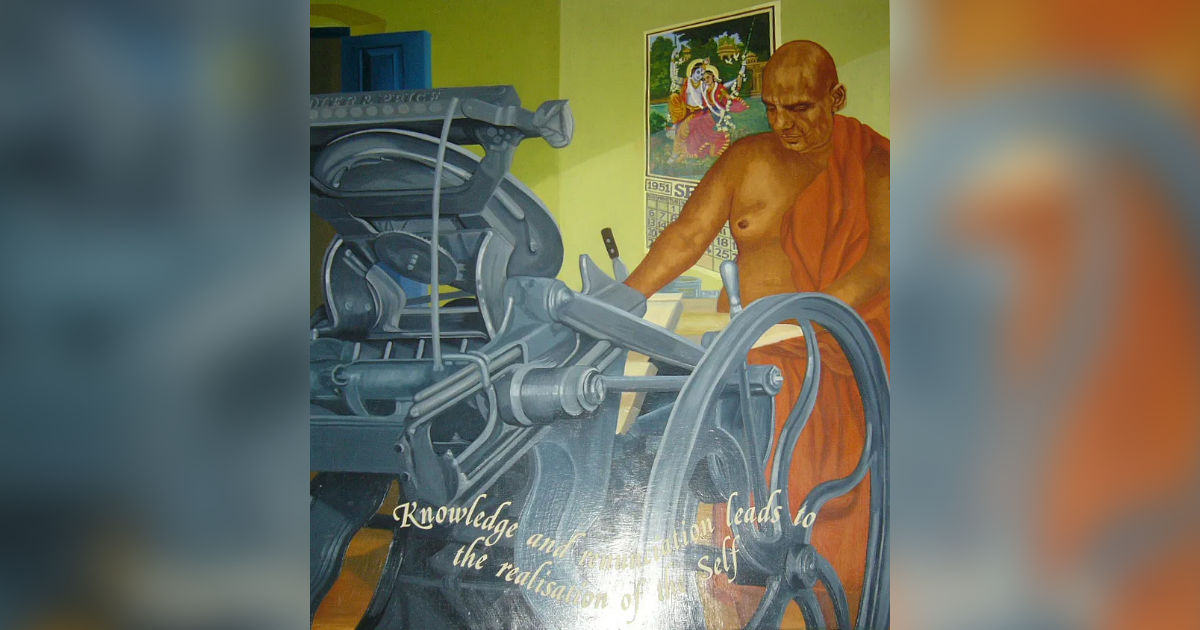
Swami Satyananda Saraswati, my Guru and founder of the Bihar School of Yoga, spent twelve years in Swami Sivananda’s ashram. In that period, he found that many persons wrote to Swami Sivananda, asking for help and treatment for their health problems. He would suggest that they practice Yoga. Continue reading