There are two descriptions of Aakash-Space. In the scriptures, space is known as Brahman, Kham Brahman is the statement of the Vedas, Kham means space and Brahman means the all-pervasive reality. Kham also means ether or the all-pervading, subtle element in which everything exists. Brahman is the highest universal principle, the ultimate reality of the universe in Hindu philosophy. Continue reading
Tag Archives: Prakriti
Be blessed with the nurturing Energy of the Moon
There is so much written about the moon. We all love the moon. It is magical and light up our senses. It can make us breathless. The moon effects one in different ways.
Everyone is a moon and has a dark side which he never shows to anybody. – Mark Twain
Detached Awareness
The wise one even though in the body, does not attach importance to it. Neither pleasure nor pain affect him. Whereas the person, who lives by obeying his senses is in a dream like state. Such a person lives in the body which is influenced by our karmas and are influenced by them.
The three gunas which compose us, do not affect a person who does not identify with them. However, the wise one who is free from attachments like sleeping, walking, eating, bathing, smelling and other sensory perceptions becomes a witness. Therefore, living in the midst of Prakriti one becomes unattached like the sky, sun and the wind. – Uddhava Gita: The Last Message of Sri Krishna. Chapter 6: Verses 8—12
Prana and renewable energy
Dear Ones, we are all aware of the five elements, which comprise the universe, mother earth and all sentient beings. The five elements are earth, water, fire, air, and ether. We practice sadhanas to purify these elements. Continue reading
A Parrot tale
Dear ones, early this morning my husband was going out of the gate for a walk. Suddenly a parrot fell at his feet. He picked up the parrot and got a cup of water. The parrot drank the water and flew away. I was so happy when he told me. We have wild cats wandering about and the poor parrot could have been breakfast for one of them. It is hot in Delhi, and can you imagine that many peacocks died of thirst last year. Please keep a mud bowl of water for birds, wherever you live in the summer. Continue reading
The feminine principle
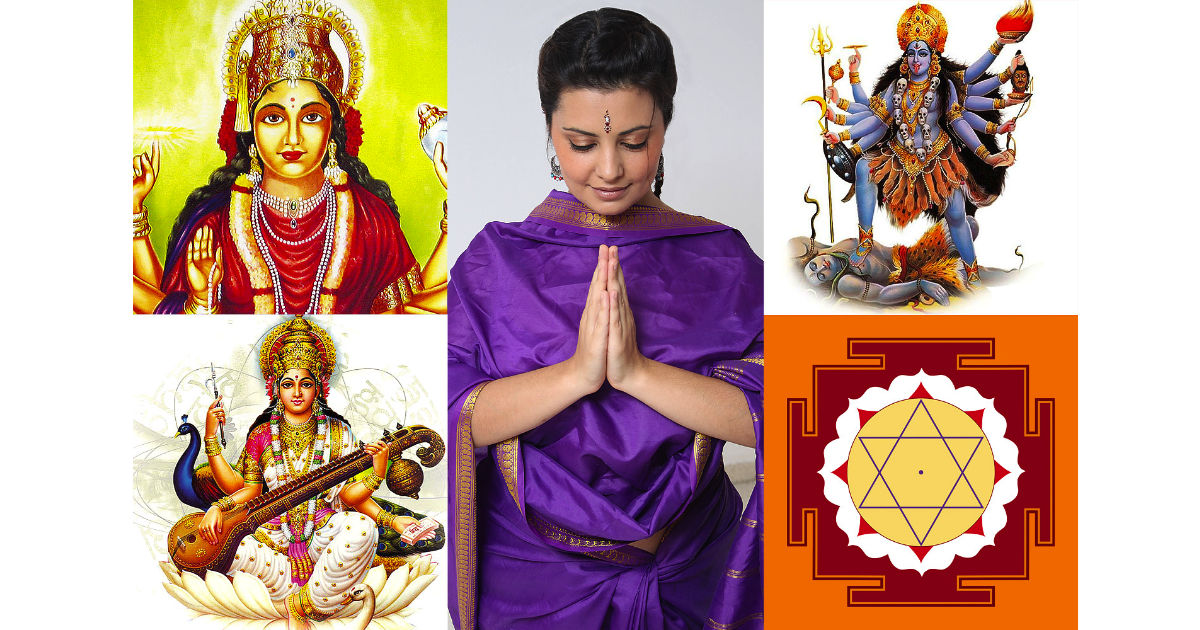
In the context of Samkhya philosophy, Prakriti is the dynamic feminine principle of nature and creation, the source of the universe. Prakriti is the feminine aspect and is understood as the fundamental nature of the universe. Animals are seen as expressions of Prakriti. They embody the natural laws and tendencies that govern the universe. In this context let us look at the animal world.
I will share three narratives. Continue reading
The perfect role model
It was the beginning of the season for planting crops in Mithila. King Janaka, the ruler of Mithila was invited to be the first to plough the land with a golden hoe. There were musical sounds of bells, drums and conch shells’ trumpets, and the king plunged the hoe into the ground. Continue reading
985 – Star light, star bright
Star light, star bright, first star I see tonight, I wish I may, I wish I might, have this wish, I wish tonight.
We have always been enchanted by stars. The Phoenicians looked to the sun’s movement across the heaven to tell them their direction. Stars since ancient times are described as forever hope, destiny, heaven and freedom. We also believe that seeing a falling star will fulfill our wishes. One has to wish immediately, because a falling star disappears in seconds. Continue reading
836 – Masculinity and Femineity
We believe that in the creation of the universe, God revealed two aspects of himself, Male and Female. The male was considered Purush, wisdom and space. Female was Prakriti, nature. Neither could survive without the other. Space is everywhere and wisdom is hidden in it. However, there is no creation. The creation occurs with Father Purush and Mother Prakriti or Shakti. Both Purush and Prakriti unite within us and in the cosmos for the wonderful universes. Continue reading
773 – Some questions
For which we seek the answers.
Why are temples built facing the east? Temples are built facing the east so that the first rays of the rising sun can fall on the image of the deity. The deity faces east, and the devotees face west, so that the sun’s rays fall on the god and are reflected on the devotee. Temples are compared to a woman’s body, sitting with her knees bent. The place where the deity is installed is known as the Garbha Griha, womb. Continue reading
596 – 5 sacrifices to offer
There are five sacrifices which we must offer daily and these are spoken about by all Gurus. There are five Gods also associated with the sacrifices.
- The Sacrifice to Rishi or Vedas, Rrushi Yajnya (sacrifice for the source of knowledge). Siva is source of knowledge and universal teacher.
- The Sacrifice to Devas or Deva Yajnya (protection for the environmental powers as Gods). Durga is an integration of all godly powers.
- The Sacrifice to Pitris or Pitru Yajnya (responsibility for the parents, ancestors and self-genetic system). Surya is a token of respect and remembrance to the ancestors and forefathers.
- The Sacrifice to Men or Nrru Yajyna (positive interaction with fellow human beings of the society). Ganesha is the God for this sacrifice and is associated with community activity.
- The Sacrifice to Bhutas or Bhoota Yajnya (care for the protection of biodiversity). Vishnu is the God for preserving the universe.
Each one of these has an outer and external meaning. Continue reading
168 – The Divine Forms of Devi
Swami Satya Dharma Saraswati was my first teacher at the Ashram. She was an American who came to the Ashram and never went back. She has written about the divine forms of Devi which were the subject of discussion between, the immortal Narada Muni and Lord Vishnu. Lord Vishnu spoke about the divine attributes of the Cosmic Mother, and the description is given in the Devi Bhagwatam (Book 1X). Continue reading
158 – What was the split
The great split resulted in Purush and Prakriti. According to the Brihad–Aranyaka Upanishad, during the creation there was the single self, and he was alone and fearful. He split himself. The split portion was identified as Prakriti, and Purusha. Continue reading
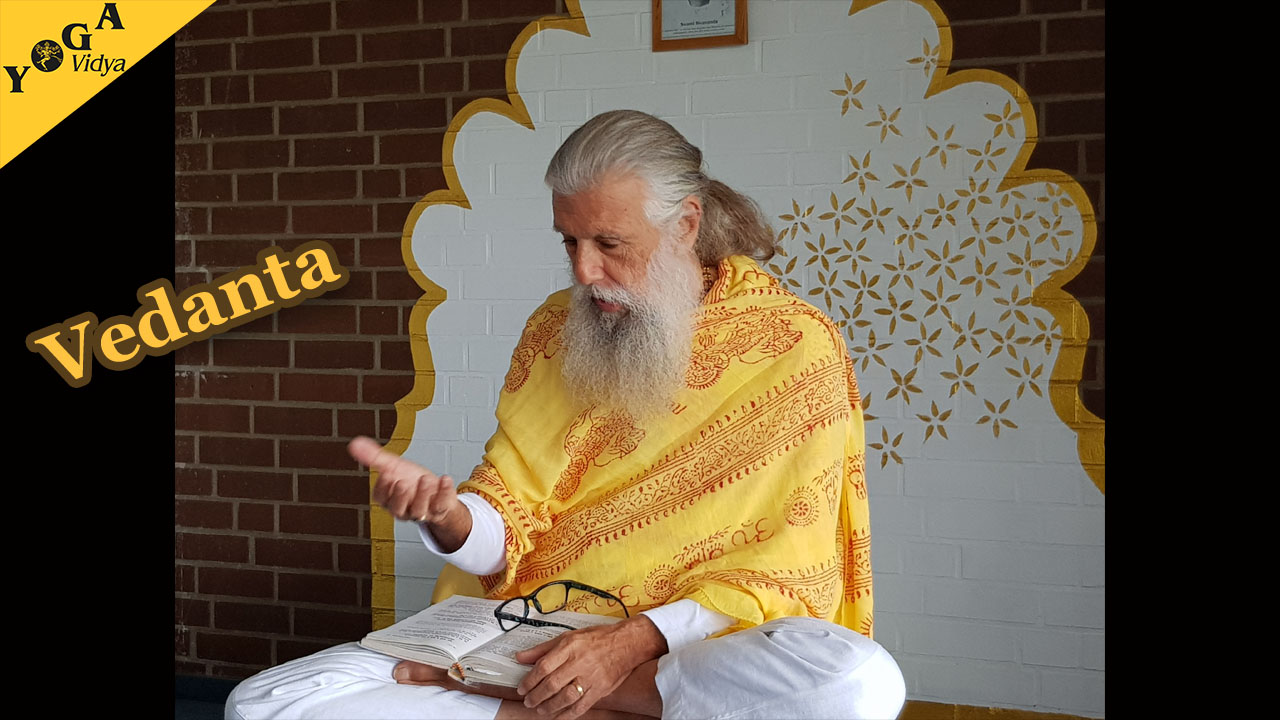
Intuition of Reality – Vedanta Talk 6 by Ira Schepetin
Prakriti and Gunas. Bhagavad Gita Chapter 7. Types of Devotees. Karma Yoga. Stages of Karma Yoga. Chapter 12, 8-20 Bhagavad Gita.
More Vedanta Seminars you will find here.
More on Vedanta you will find here.
English Community, Blog, Seminars you will find here.
Podcast: Play in new window | Download
Subscribe: RSS