The Sadhana of Satya is a continuous process. In order to practice the Satya Sadhana, one has to understand the meaning of Satya and its application to one’s life. Continue reading
Tag Archives: self-awareness
Live in the present moment
My Guru, Swami Satyananda stated that freedom was living in the present moment. He said that it was important to be present without being influenced or entrapped in the past or future.
It happens in little steps by being conscious of one’s actions and not being swept away by the fluctuations of the mind. Continue reading
There are Asuras in this World
Let us address the Asuras existing in the world. I am using the word Asuras because it is used for a class of demons and antagonists. They waged wars against the Devas, who represented forces of light and positivity. The common phrase is the elephant in the room, but the elephant is a good animal with buddhi (wisdom), affection and loyalty. Continue reading
Our Soul Connection
As a person shedding worn out garments, takes other new ones likewise the embodied soul casting off its worn-out bodies, enters, others that are new. Weapons can’t cut it, fire can’t burn it, water can’t wet, nor can wind dry it. – Bhagwad Gita Chapter 2, Verse 22
This verse emphasizes the transient nature of the physical body and the continuous cycle of birth and death. Continue reading
Response to rudeness
First of all, let us define rudeness. Rudeness is described as a weak imitation of strength. So many of us practice rudeness. It is also described as behavior which is inappropriate. It is being insolent, discourteous, impertinent and impolite. Continue reading
Yoga Pushpam
Every child is pure; every child is untainted and innocent
You do not really remember your childhood,
But if you did, you would remember that at that time
You had the awareness of yourself. – ‘High on Waves’ by Swami Satyananda Saraswati
The color code in Fengshui and Hinduism
In Fengshui there are four colors which are regarded as powerful. They attract wealth and abundance, and they are purple, deep blues, gold and dark greens.
Purple is associated with spirituality and one’s interior life. It is also associated with material possessions. It is believed that if we feel complete, we will send that energy out into the world and riches will begin to find their way to us. Continue reading
888 – Chanting Aum and Shanti three times respectively
Why chant three times? We chant because we are seeking peace in our body, mind and spirit. It also makes our past, present and future tranquil. We chant Aum at the beginning of our sadhana, at the end and then Shanti. Continue reading
825 – The Brain is wider than the Sky
The Brain – is wider than the Sky –
For – put them side by side –
The one the other will contain
With ease – and you – beside –
The Brain is deeper than the sea –
For – hold them – Blue to Blue
The one the other will absorb –
As sponges – Buckets – do –
The Brain is just the weight of God –
For Heft them – Pound for Pound –
And they will differ – if they do –
As Syllable from Sound –
Emily Dickinson, 1862
780 – A clean slate
What is the color of slate? It varies from grey-blue, greenish-grey, black tan or purplish grey. My grandma was deaf and she had a dark, grey slate on which we would write. The slate I am writing about is the slate of one’s being. Continue reading
618 – Brahma Vidya
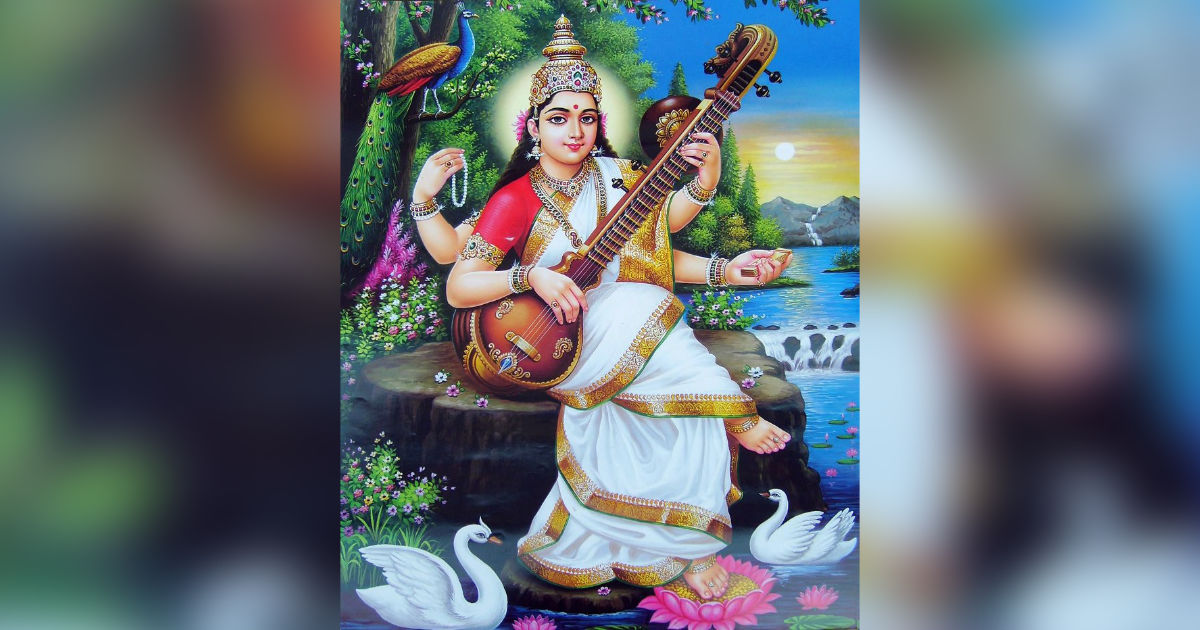
What does Vidya mean? Vidya means correct knowledge in any field of science, learning, philosophy or any factual knowledge that cannot be disputed or refuted. Its root is Vid (Sanskrit) which means to reason upon, knower, finding, knowing, acquiring or understanding. Vidya is also the name of Saraswati. Continue reading
581 – Atma deepo bhava
Be your own light.
Heraclitus’s famous analogy of life to a river: “Upon those who step into the same rivers, different and ever different waters flow down.” Heraclitus was an ancient Greek philosopher. The central idea of his philosophy was the unity of opposites and the concept of change. He observed the world as being in a state of constant flux. Nothing remains the same and the world is impermanent. It is changing continuously. Our ignorance is responsible for this false perception. Adi Shankara calls this ignorance avidya and to remove this we need that light, which is from within. Continue reading
580 – Ether and the power of speech
The Latin root of Ether is aether, which means, “the upper, pure, bright air.” Ether was described as a substance that was said to fill all space and make up all bodies. Ether is the fifth and highest element after air, fire, water and earth. It is believed to be the substance composing all heavenly bodies. Continue reading
568 – Chant with your heart – the original
The practices of Ajapa Japa were given by Swami Satyananda Saraswati in 1963 in Cama Hall, Bombay.
In his talk, he has given six practices for the followers of Yoga. They are simple and easy to follow. What is essential is that the Ajapa Japa sadhana has to be practiced for a month. I have written the sadhana as he gave it and it is simply said by the Guru for all to follow. Continue reading
567 – Chant with your heart – part 6
Soham with Shanmukhi Mudra.
This last stage is the most difficult and requires intense imagination, patience and control over the breathing process. First practice Shanmukhi mudra. Close your ears with the thumbs. Close your eyes with the index fingers, and lips with the ring and little fingers. Take a deep breath in and then close your nostrils with your middle fingers. Continue reading