
What happens if one meditates on Aum constantly?

Prashnopanishad. Written by Pippalda.

Satyakama, son of Sibi asked what world will a being attain, who meditates on Aum throughout his life.

Pippalda answered:
Aum is both the higher and lower Brahman. He who meditates on Aum, will surely attain one of them. He, who meditates on Aum with a shallow understanding will gain a semblance of enlightenment. The Rik verses will bear him back quickly to be reborn on this earth. If he then continues to observe austerities, celibacy and faith, he will achieve spiritual greatness. Continue reading

Yama conversing with Nachiketa

Nachiketa’s story is central to the Katha Upanishad, where his steadfast determination to seek knowledge and truth lead him to learn the nature of the soul and the truth from Yama (God of Death and Justice). Nachiketa was the son of a greedy sage, who was offered to Yama by his father. Continue reading

How does Aum connect to Aakash?

There are two descriptions of Aakash-Space. In the scriptures, space is known as Brahman, Kham Brahman is the statement of the Vedas, Kham means space and Brahman means the all-pervasive reality. Kham also means ether or the all-pervading, subtle element in which everything exists. Brahman is the highest universal principle, the ultimate reality of the universe in Hindu philosophy. Continue reading

How does one perceive the Divine Mother?

The Divine Mother is so beautiful. In her higher manifestations her beauty is formless. She is in everything. Her divine compassionate love is expressed in the raindrops. Her beauty is reflected in the colors of the rainbow. She offers fresh hope to mankind with the rose-tinted clouds at dawn. Above all she is present in one’s heart. Continue reading

The spiritual connection of numbers

In all faiths numbers play a role. 108, 13, 3, 613, 786, 5, 888, 666 are spiritual numbers.

In my seminars, my students always ask, why is 108 important? In Hinduism 108 is a holy number. An individual breathes 21,600 times in 24 hours. When divided by two, it becomes 10,800 resembling 2 horizons – the north and south poles, emphasizing 108 as basic. The sky is divided into 27 nakshatras, each having four sectors of 30, i.e. 27×4=108. The moon crosses one nakshatra in 54 hours, which if divided into day and night gives 54×2=108. Continue reading

892 – Who has control of the tongue and the mind?

Goddess Baglamukhi is the eighth Dasa (ten) Mahavidya (Goddesses of Wisdom). Her name means one who has control of the tongue and of the mind. She provides control over one’s emotions and misbehavior (anger, jealousy, etc.). Continue reading

887 – Questions we seek answers for

What and why is Aum added before every mantra?

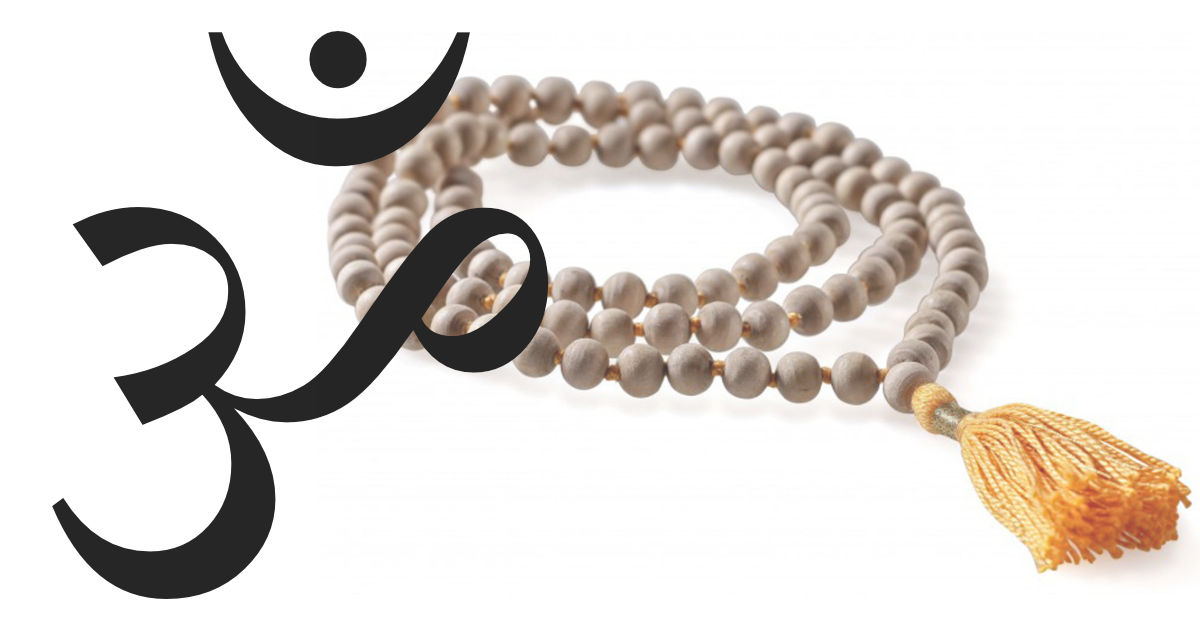
Aum is the basis of all sounds and is considered the universal symbol for God. Aum of the Vedas became the sacred Hum of the Tibetans. Amen is repeated by the Moslems and Amen by the Egyptians, Greeks, Jews and Christians. Amen in Hebrew means sure and faithful. It is the all-pervading sound which emanates from the invisible Cosmic vibrations. It is the voice of creation and testifies the divine presence in every atom. One can hear the sound of Aum in the Anahata chakra through meditation. Therefore, it is chanted at the end and beginning of a sadhana. Continue reading

791 – Handling of fears

Which arise in the mind during puja and meditation.

A saying of the Paramhamsa Swami Satyananda Saraswati.

Explanation by the Master

All of us when we meditate find that we encounter our latent fears. What are these fears? They range from passion, lust, anger, desire, envy and of course unexplained fear. One feels completely blocked as they are churning in the mind. It is a self-defeating battle to suppress them and they keep regenerating and multiplying. Fear is an essential part of Puja with bhava, it pussyfoots in and in dhyana also it comes in. Continue reading

590 – Who is a Hindu?

Hinduism is the world’s oldest faith in the world. Hindus believe in the doctrines of samsara (the continues cycle of life, death and reincarnation) and karma (the universal law of cause and effect). In Hinduism, the soul or Atman is the crux of it. Continue reading

453 – Science of Sound

In ancient times words and music were used to attain an altered state of mind. Music was an aid to develop the mind, spirit, emotions and sensitivity. In this modern age, different forms of music have developed. Until recent times music was used to tranquilize the agitations of the mind. – Swami Niranjananda Saraswati.

In the beginning was Brahman with whom was the Word. And the Word is Brahman. Vedas.
In the beginning was the word and the word was with God and the word was God. – New Testament, The Gospel of St. John.

Hinduism and Christianity agree that in the beginning was the Word. There are many sounds: the sounds of the Cosmos, Primal Vibration, the Logos, the Music of the Spheres, the Word, the Tone and many more. All of these are included in the Sanskrit term Aum. Continue reading

438 – Light and fragrance

Each mantra has its own fragrance. Those who chant AUM have known a certain fragrance. Similarly, each mantra has its own light. The light in a temple is not decided by external light but by inner light. Many of us sit drenched in brilliant lights and heavy fragrances and imagine that we are meditating. Continue reading